
about playfast
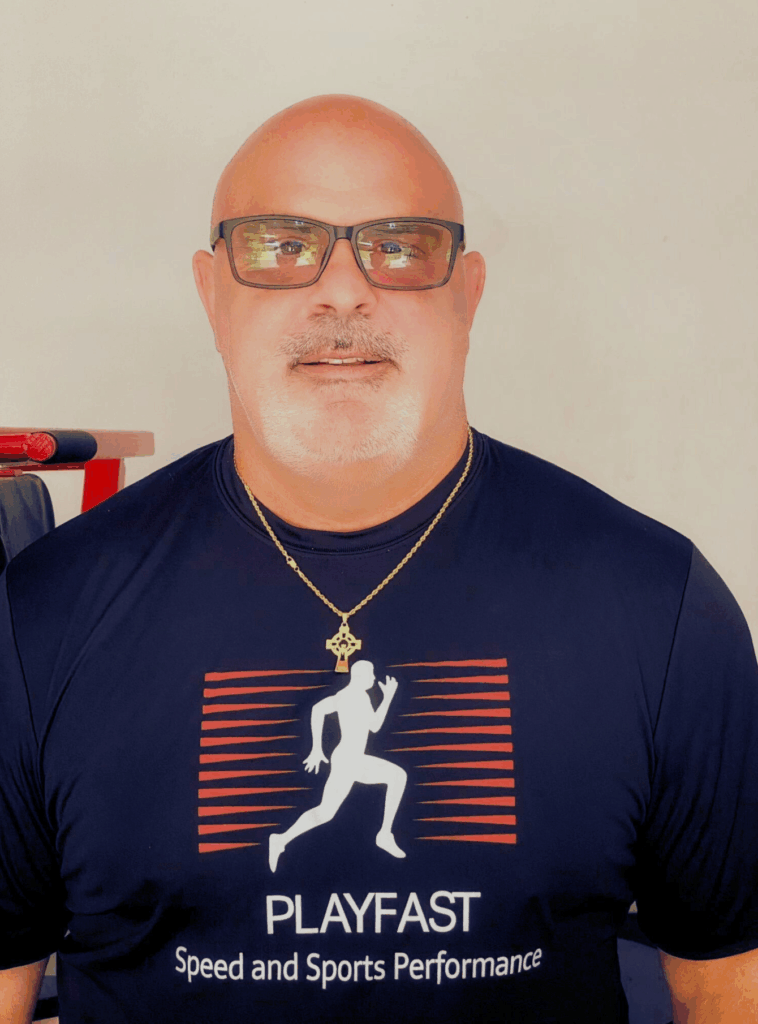
scott emerson
Owner, Trainer
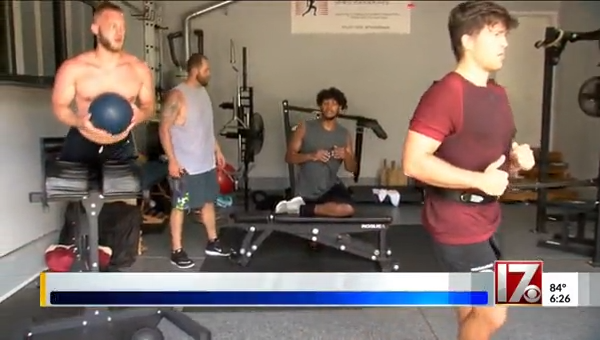
PLAYFAST is the premier athlete performance facility specializing in speed, power, and total athletic development. With innovative, state-of-the-art equipment not found anywhere else in the area, PLAYFAST gives athletes the competitive edge they need to excel.
Led by Scott Emerson, a performance expert with over 22 years of experience, PLAYFAST has trained thousands of athletes ranging from high school standouts to seasoned professionals. An impressive 75% of high school athletes who have trained at PLAYFAST have gone on to compete at the nextlevel, with many earning scholarships.
Emerson’s extensive certifications and dedication to staying on the cutting edge of performance research make him one of the most trusted names in athletic training.
PLAYFAST can benefit any athlete male or female – any sport. We even welcome adults or non athletes that just want to improve their health. At just $30 per session, PLAYFAST offers unmatched training value in the region—delivering elite-level performance training at an affordable price.
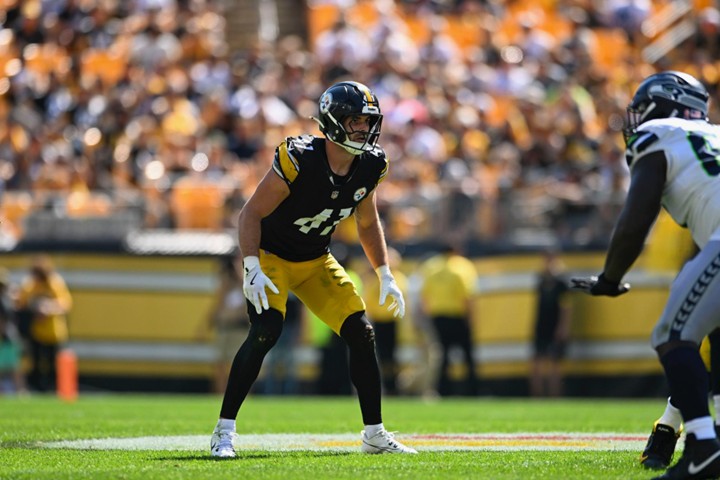
PAYTON WILSON, LINEBACKER, Pittsburgh steelers
“Coach Emerson has taken my game to the next level with his style of training. Training at Playfast has made me stronger, more explosive, and faster. Coach Emerson is a great coach and even better person!”

THAYER THOMAS, WIDE RECEIVER, DENVER BRONCOS
“Playfast is a unique training methodology that takes a wholistic approach to speed, power, strength, and recovery. Without playfast, I wouldn’t have made it to the nfl.”
why we train like we do
Plyometrics is a form of exercise training that develops fast, powerful movements and enhances nervous system function to improve sports performance.
Russian scientist Yuri Verkoshansky found that the greatest strength gains come from a plyometric approach he termed the “shock method.”
This method relies on coordinated muscle-tendon actions controlled by the involuntary nervous system through the Stretch Reflex (Myotatic Reflex). During this reflex, a muscle contracts in response to being stretched, automatically regulating muscle length.
When stretched, the muscle spindle increases neural activity, causing contraction to resist further lengthening while relaxing the opposing muscle. In essence, to prevent tearing, the muscle contracts powerfully and shortens.
For example, during a depth jump, the muscle-tendon complex first lengthens rapidly (eccentric phase), briefly pauses (amortization phase), and then shortens explosively (concentric phase) to propel the athlete upward.
Verkoshansky showed that maximal force occurs at the eccentric-to-concentric transition. Plyometric and strength training therefore emphasize minimizing this transition time to preserve stored elastic energy and convert it into kinetic energy during the explosive phase. Strength (“maximal force”) differs from explosive strength (maximum rate of force development, or RFD): strength is the greatest force produced over any time span, while explosive strength is how quickly that force can be applied—critical for acceleration, jumping, or throwing.
Different sports demand distinct expressions of explosive strength. In football, a lineman and receiver may share peak explosive strength, but the lineman produces greater force at lower velocity, while the receiver generates less force at higher velocity. Since explosive strength depends on both force and speed, both can reach the same peak output in different ways.
Overall, combining resistance and plyometric training yields superior improvements in athletic ability and performance. – SSL
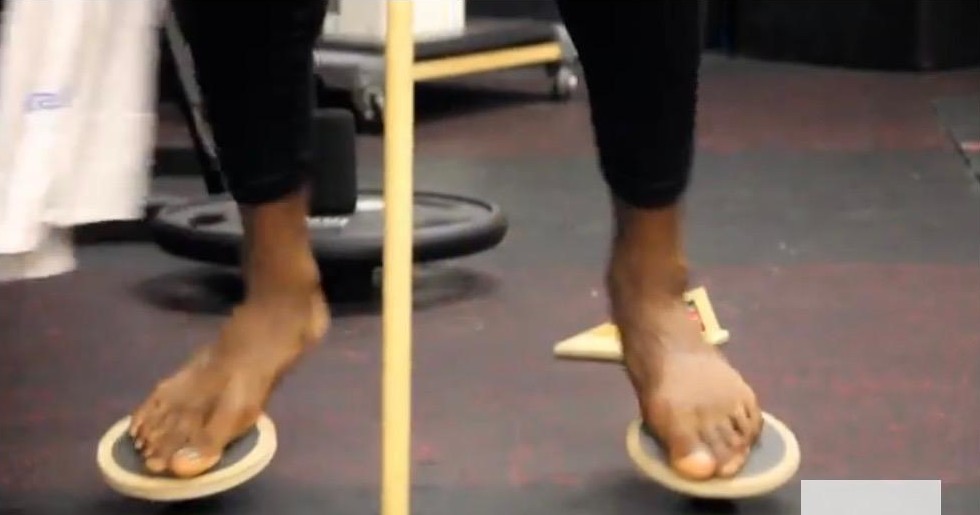
FOOT WORK
The importance of developing strength in the feet is largely overlooked in most conventional training systems.
Yet the feet serve as the foundation of all athletic movement, as they are the only parts of the body in constant contact with the ground.
They function not only as weight-bearing structures but also as shock absorbers and as powerful levers that propel the body horizontally, vertically, and laterally.
Research has shown that during the initial phase of running or jumping, the feet generate more force than all the other muscles of the lower limbs combined.
Although the feet contain 25% of the body’s total bones, they hold only about 1% of its muscle mass.
This imbalance highlights the need for focused strength training to improve their ability to support body weight and withstand the large forces experienced in both daily movement and advanced athletic performance.
Strong, mobile feet contribute to more efficient movement mechanics, better force transfer through the kinetic chain, and a lower risk of overuse injuries.
The Footwork Program is specifically designed to strengthen the feet across multiple ranges of motion, planes of movement, and speeds.
Additionally, its exercises challenge balance, coordination, and proprioception—three essential components of athleticism that influence stability, agility, and overall performance.
Over time, this training not only enhances foot strength but also refines neuromuscular control, improving how the entire body moves and responds during dynamic sport-specific actions.
– SSL
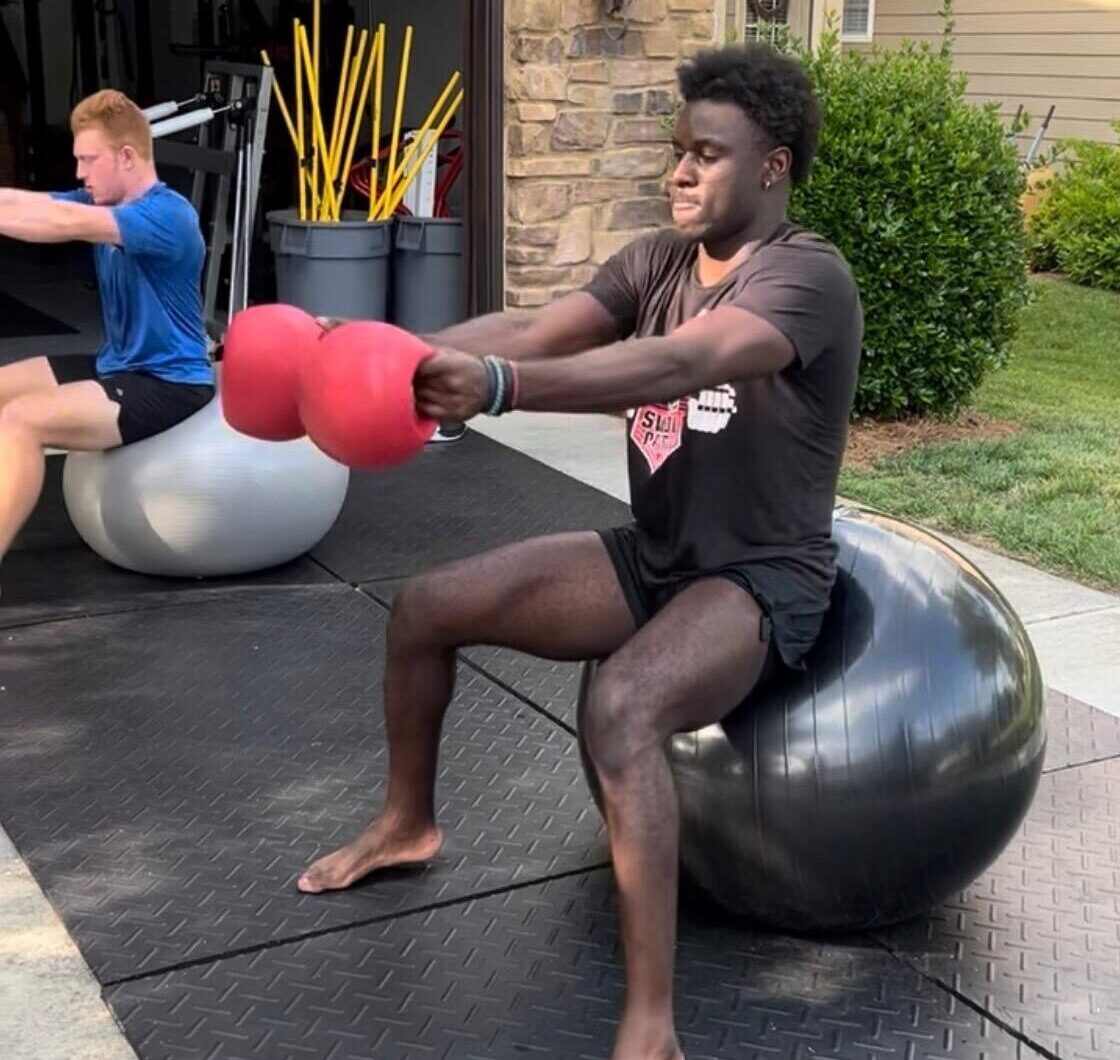
BALL WORK
The role of the core in terms of performance, rehabilitation and injury prevention has been well documented.
An athlete should be able to move the limbs to and from the center of the body, while the trunk (proximal part of the body) is stabilized.
Simply put, athletes need proximal stability for more effective distal mobility. It is believed that co-contraction of the deep muscles of the abdomen, back and pelvic floor as well as the diaphragm (“the core”) should stabilize the trunk in a manner that does not restrict movement or breathing.
Currently, the majority of literature revolves around pre-bracing “the core” in order to achieve proximal stability.
Conventional core strengthening exercises are therefore often static in nature and the limbs are not moved through the full range of motion while the core is braced.
These exercises are also done at a slow pace. Naturally, this does not simulate the majority of general and sport specific movements. I believe that proximal stability is achieved by what is known as tensegrity (tension + integrity).
All humans have a spine with muscles that operate around it to control movement and body posture and generate forces that stiffen the spine. In essence, we have a three dimensional movement system that controls the spine in space. Tension therefore is created by moving the limbs to and from the body.
In a high load situation co-activation of this 3D movement system together with intra-abdominal pressure stiffen and protect the spine.
Proximal stability should also be trained to stabilize and control movement at the speed at which the athlete will perform his/her sport.
The Ball Program is therefore a dynamic strengthening program that challenges proximal stability by moving the trunk and/or limbs in functional movement patterns, at speeds and in ranges at which athletic movements occur.
This type of training also helps keep the athletes fascial alignment in place. – SSL
POOL PROGRAM
The external use of water for a variety of purposes is as old as mankind and has been widely used in ancient cultures.
Water training and therapy have shown beneficial effects on various physiological systems of the body. I therefore use the Pool program for training, recovery after training as well as rehabilitation.
From a training perspective, strength is developed as the athlete is constantly required to work against resistance in any range of motion and in multiple planes of movement. Muscles and joints are therefore strengthened in multiple ranges and planes of movement.
In addition, water demands fluid movement in order to generate velocity. Coordinated, simultaneous contraction of the agonist and relaxation of the antagonist is therefore key.
The Poolwork Program is ballistic in nature athletes, therefore also utilize the stretch-shortening muscle cycle that ultimately leads to the ability to produce maximal force in a cyclical movement.
As there is minimal load or weight bearing on the joints, water therapy can be introduced early in the rehabilitation process. In addition, the weight of the limbs is supported by the water, which allows an athlete to continue to move an injured body part through full range of motion.
Pressure from water on soft tissue have also shown to reduce pain and swelling and promote muscle relaxation. Various studies have also shown that, compared to passive methods (massage, ice bath, compressive therapy etc.), active recovery in water after training significantly lower fatigue and delayed onset of muscle soreness (DOMS) and improve physical recovery. – SSL